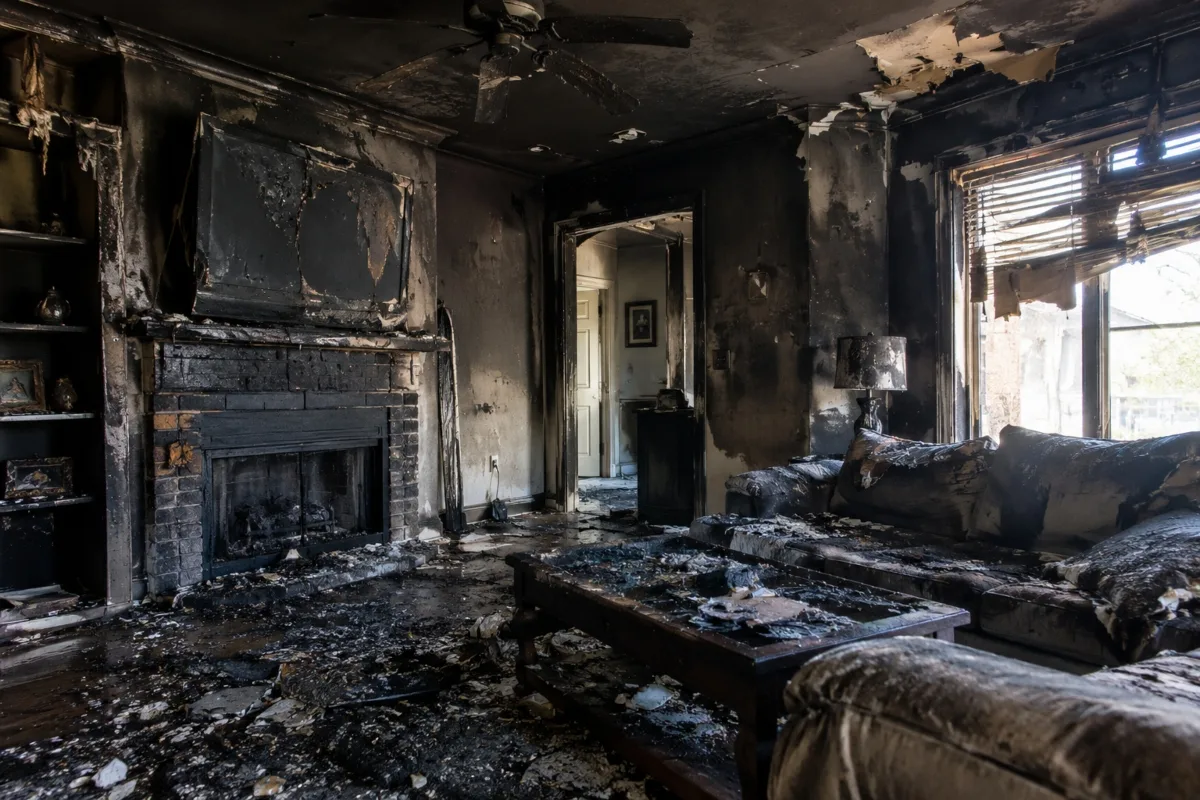
A fire can cause serious damage to a home or business in a matter of minutes. Even after the flames have been extinguished, smoke, soot, heat, and water used during firefighting can continue affecting the property.
For Rosenberg homeowners, addressing fire and smoke damage quickly is important. Damage may extend beyond the areas directly touched by flames, and smoke residues and odors can spread throughout a property.
Quick Facts
- Fire damage can affect structural materials, contents, flooring, walls, ceilings, and other parts of a property.
- Smoke and soot can travel beyond the immediate area of a fire.
- Smoke odors can remain in porous materials if they are not properly cleaned.
- Water and moisture from firefighting efforts can create additional damage.
- Some damage may not be immediately visible after a fire.
- Prompt professional assessment can help identify the full extent of fire, smoke, and water damage.
- Professional fire restoration may include cleaning, smoke and soot removal, odor treatment, and repairs.
What Happens to a Home After a Fire?
The damage caused by a fire does not necessarily end when the flames are put out.
Depending on the size and location of the fire, a property may experience damage from flames, extreme heat, smoke, soot, and water. Firefighters may also use significant amounts of water to extinguish the fire, creating another source of potential property damage.
Even a relatively contained fire can affect surrounding rooms through smoke and soot migration.
This is why a professional assessment is important after a fire. Determining what was affected can help establish the appropriate cleaning, restoration, and repair process.
How Does Smoke Damage Affect a Home?
Smoke can travel through a property in ways that are not always obvious.
Smoke particles can move through open doorways, HVAC systems, wall cavities, and other pathways. As a result, rooms that were not directly affected by the flames may still have smoke residue or odors.
Smoke can affect:
- Walls and ceilings
- Flooring
- Carpeting and padding
- Furniture
- Curtains and other fabrics
- Cabinets
- Personal belongings
- Appliances and electronics
- HVAC systems
- Other porous materials
Smoke residue can also leave behind discoloration and persistent odors if affected materials are not properly cleaned.
Can Smoke Damage Occur Even If There Wasn't Much Fire Damage?
Yes.
A fire does not have to destroy a large portion of a property for smoke damage to become a problem.
Smoke can spread throughout a home or business even when the fire itself was limited to one room. Depending on the type of materials that burned, smoke may leave behind different types of residues and odors.
A professional inspection can help determine whether smoke has affected areas outside the room where the fire occurred.
What Are the Signs of Smoke and Fire Damage?
Some fire damage is immediately obvious, while other problems may become apparent later.
After a fire, homeowners should look for:
- Black or gray soot on surfaces
- Discolored walls or ceilings
- Persistent smoke odors
- Burned or melted materials
- Peeling paint
- Damaged flooring
- Smoke-stained furniture or fabrics
- Water damage from firefighting efforts
- Warped materials
- Damaged insulation
- Residue around vents and HVAC components
- Damage to personal belongings
A property may appear relatively intact while still having significant smoke, soot, or water damage.
Where Can Smoke and Soot Damage Be Found?
Smoke and soot can affect areas throughout a property, including locations away from the original fire.
Walls and Ceilings
Smoke residue can settle on painted and finished surfaces, leaving behind staining and odors.
Flooring and Carpeting
Smoke can affect carpeting, padding, hardwood, laminate, and other flooring materials. Water used during firefighting can create additional moisture-related damage.
Furniture and Contents
Furniture, clothing, curtains, and other belongings can absorb smoke odors and collect soot particles.
HVAC Systems
Smoke can enter HVAC systems and potentially distribute odors and particles to other areas of a property.
Kitchens and Other Enclosed Areas
Smoke and soot can accumulate in cabinets, closets, and other enclosed spaces, making thorough cleaning important after a fire.
Why Does Smoke Odor Remain After a Fire?
Smoke odors can be difficult to eliminate because smoke particles can become absorbed into porous materials.
Cleaning the visible soot from a surface does not necessarily mean that all smoke-related odors have been removed. Fabrics, upholstery, wood, drywall, carpeting, and other materials may retain smoke odors.
Professional smoke cleaning and odor treatment can help address affected materials and reduce persistent odors.
Can Water Cause Additional Damage After a Fire?
Yes.
Water used to extinguish a fire can create additional damage to a property. Depending on the amount of water used, moisture may affect drywall, flooring, insulation, cabinets, furniture, and other materials.
Standing water should be addressed promptly, and affected materials may need to be dried and evaluated as part of the restoration process.
Fire restoration can therefore involve more than smoke and soot cleaning. Water removal and drying may also be necessary.
What Should You Do After a Fire?
After emergency responders have determined that it is safe to enter the property, homeowners can take several steps to help protect the property.
Consider the following:
- Avoid entering unsafe areas of the property.
- Do not disturb heavily damaged materials unnecessarily.
- Avoid attempting to clean extensive soot or smoke damage yourself.
- Do not use electrical appliances that may have been affected by fire or water.
- Document visible damage with photographs when it is safe to do so.
- Protect the property from additional damage when appropriate.
- Contact a professional restoration company for an assessment.
The appropriate next steps depend on the severity and type of damage.
Should You Clean Smoke Damage Yourself?
Small amounts of residue may sometimes be cleaned from certain surfaces, but extensive smoke and soot damage can require professional restoration techniques.
Aggressive cleaning can potentially spread soot or cause additional damage to affected materials. Different types of smoke residue may also require different cleaning approaches.
A professional restoration company can evaluate the materials involved and determine the appropriate cleaning and restoration methods.
When Should You Call a Professional?
Professional fire restoration may be appropriate when a property has experienced significant fire, smoke, soot, or water damage.
A restoration company can assess affected areas, identify visible and hidden damage, clean smoke and soot residues, address odors, remove water when necessary, and help restore the property.
United Water Restoration Group of Missouri City provides fire restoration and smoke cleaning services for homeowners and businesses in the surrounding area. The company offers 24/7 emergency restoration services and serves Rosenberg and other communities throughout the greater Houston area.
How Long Does Fire Damage Restoration Take?
There is no single timeline for fire damage restoration.
The amount of time required depends on factors such as:
- The size of the fire
- The areas affected by smoke
- The amount of soot present
- The extent of water damage
- The materials that were damaged
- The amount of cleaning required
- Whether repairs or reconstruction are necessary
A smaller fire contained to one area may require less restoration work than a major fire involving multiple rooms or extensive smoke and water damage.
The first step is determining the extent of the damage and developing an appropriate restoration plan.
What Happens During Fire Damage Restoration?
The restoration process depends on the circumstances of the loss, but it may include several steps.
Property Assessment
The affected property is evaluated to determine the extent of fire, smoke, soot, and water damage.
Smoke and Soot Removal
Affected surfaces and materials can be cleaned to remove smoke residues and soot.
Water Removal and Drying
If firefighting efforts introduced water into the property, standing water and excess moisture may need to be removed.
Cleaning and Odor Treatment
Affected contents and structural materials may require specialized cleaning and deodorization.
Repairs and Restoration
Damaged portions of the property may require repairs or reconstruction to return the home or business to an appropriate condition.
Why Fast Action Matters After a Fire
Fire damage can continue affecting a property even after the fire has been extinguished.
Smoke residues can remain on surfaces, odors can become absorbed into porous materials, and water from firefighting efforts can create additional moisture-related damage.
The sooner the property is properly evaluated, the sooner these issues can be identified and addressed.
For Rosenberg homeowners, prompt professional assistance can help determine what needs to be cleaned, dried, repaired, or restored.
When Professional Fire Restoration Is Recommended
Professional fire restoration may be recommended when a property has experienced extensive fire damage, widespread smoke or soot contamination, persistent smoke odors, or water damage from firefighting efforts.
Restoration professionals can evaluate the affected areas, clean and restore damaged materials when appropriate, address smoke and soot, and identify additional restoration needs.
United Water Restoration Group of Missouri City offers fire restoration and smoke cleaning services as part of its full-service restoration capabilities. The company provides emergency restoration services 24 hours a day, 7 days a week, 365 days a year.
Protect Your Rosenberg Home After a Fire
A fire can leave behind much more than visible burn damage. Smoke, soot, odors, heat, and water can all affect a property, sometimes extending well beyond the original fire-damaged area.
The most important step after a fire is to make sure the property is safe and have the damage properly evaluated. Professional smoke cleaning, fire restoration, water removal, drying, and repairs can help address the different types of damage that may remain after a fire.
If your Rosenberg home or business has experienced fire or smoke damage, United Water Restoration Group of Missouri City can help assess the property and determine the appropriate next steps for restoration.
United Water Restoration Group of Missouri City provides 24/7 smoke and fire damage restoration services throughout Rosenberg and the surrounding communities. Our service area includes Missouri City, Sugar Land, Stafford, Richmond, Rosenberg, Sienna, Pearland, and other areas throughout Fort Bend County and the greater Houston area. If your home or business has experienced fire, smoke, soot, or water damage, our restoration team is available around the clock to help you take the next steps toward restoring your property.